

Introduction
A curriculum vitae (CV) is, by design, a curated professional narrative. It functions as a selective self-portrait, foregrounding achievements, credentials, and career milestones while necessarily omitting less flattering behavioural tendencies—habitual lateness, difficulty in collaboration, failure to meet deadlines, or misalignment with organisational culture. The CV is therefore not a neutral representation of professional identity but a strategic document constructed to maximise employability. Yet, despite its partiality, many organisations continue to treat it as a primary epistemic source for predicting future performance.
This reliance reflects an implicit assumption: that demonstrated competence, typically measured through formal qualifications, technical certifications, and prior role accomplishments, translates directly into future effectiveness. However, growing evidence in organisational behaviour and human resource management challenges this linear presumption. Technical competence, while necessary, is not sufficient. Long-term performance is deeply mediated by behavioural adaptability, emotional intelligence, cultural alignment, and value congruence within teams.
Research Insight
Empirical and practitioner-based research increasingly underscores the predictive value of cultural fit and character-based attributes over technical proficiency alone. High-performing organisations often prioritise attitudinal alignment and relational capacity, recognising that technical skills can be developed more readily than core dispositions or deeply embedded behavioural patterns. The distinction here is critical: competence is often trainable; character and cultural misalignment are comparatively resistant to short-term intervention. Attempting to reshape an individual’s core behavioural tendencies or value orientation to align with an established organisational culture is both costly and uncertain. The result is that hiring for competence alone may produce technically proficient employees who nonetheless disrupt cohesion, undermine morale, or erode institutional ethos.
This philosophy is exemplified by organisations such as Southwest Airlines, frequently cited in management literature for its distinctive culture-centric hiring strategy. Rather than privileging technical aviation competence as the decisive hiring criterion, the airline has historically emphasised humour, humility, teamwork orientation, and service disposition as foundational selection markers. The rationale is pragmatic and developmental: it is comparatively easier to upskill an employee in procedural or technical domains than to reconfigure entrenched behavioural tendencies that undermine organisational cohesion (Ellis & Wright 2025; Knorr & Arndt 2018; Thomas 2015).
The Southwest case illustrates a broader organisational insight: sustainable performance emerges not merely from aggregating individual competencies but from cultivating cultural coherence. Where hiring is competence-dominant but culture-blind, organisations risk assembling technically proficient yet relationally fragmented teams. Conversely, when cultural alignment precedes technical refinement, organisations create fertile ground for trust, collaboration, and shared purpose—conditions that amplify skill acquisition and collective performance.
Therefore, the CV should be understood as a limited diagnostic instrument (Teixeira da Silva et al 2020; Cañibano 2009; Spence 1973). It captures what candidates have done, but not necessarily how they behaved while doing it, nor does it reveal how they will behave within a specific organisational ecosystem (Nichols et al 2025; Tholen 2024; Martinez et al 2022). A more robust approach to talent acquisition integrates competence assessment with deeper evaluation of values, adaptability, and relational intelligence. In this framing, hiring becomes not merely a transactional acquisition of skill, but a strategic investment in cultural sustainability and long-term organisational resilience.
Industry Observations
Experienced employees frequently enter organisations with deeply internalised cultural assumptions and work habits formed over extended professional trajectories. While such experience can provide valuable tacit knowledge and domain expertise, it also carries embedded norms regarding authority, communication, risk tolerance, and decision-making. These behavioural schemas, reinforced over years of organisational socialisation, are not easily recalibrated. Organisational learning theory suggests that unlearning entrenched patterns often proves more complex than acquiring new technical competencies, particularly when those patterns are intertwined with identity and prior success (Leal-Rodríguez et al 2019; Becker 2018; Busco & Riccaboni 2009).
At senior leadership levels, this dynamic becomes even more pronounced. Executives and seasoned managers often possess well-developed strategic philosophies and established leadership identities. When placed within new institutional contexts, tensions may emerge not primarily from incompetence but from competing paradigms of leadership and governance. Disagreements between senior leaders and their superiors frequently manifest as clashes over strategic direction, risk posture, or operational philosophy. Such contentions can be misdiagnosed as technical disputes, when in fact they often reflect ego investment in prior models of success and a reluctance to relinquish accustomed authority frameworks (Davids et al. 2018; Shirkani 2016; Low 2015). Senior leadership exits are more frequently attributable to philosophical misalignment than to deficiencies in competence. While public narratives often frame executive departures in terms of performance metrics, financial outcomes, or strategic missteps, deeper organisational analysis reveals that divergence in values, vision, and governing assumptions is often the decisive factor.
Importantly, these tensions are not inherently dysfunctional. Constructive dissent can sharpen strategic clarity. However, where leaders are unwilling to compromise for pragmatic or organisationally aligned reasons, ego entrenchment can obstruct adaptive decision-making. The inability to subordinate personal legacy, status, or established methodologies to collective institutional objectives risks paralysing executive cohesion.
Thus, while experienced hires bring significant human capital, organisations must remain attentive to the cultural and psychological dimensions of leadership integration. Technical mastery and prior seniority do not automatically translate into contextual fit. Without deliberate alignment processes—particularly at executive level—deeply rooted work identities may impede rather than enhance organisational agility.
To explain further, at the executive level, technical competence is typically a threshold qualification rather than a differentiating variable. Individuals who ascend to senior leadership have already demonstrated strategic acumen, domain expertise, and operational capability. What becomes contested is not whether they can lead, but how they believe leadership should be exercised. Disagreements over risk appetite, pace of transformation, stakeholder prioritisation, governance philosophy, or organisational culture frequently signal incompatible paradigms rather than incompetence.
Such philosophical divergence may surface subtly at first, through tensions in boardroom deliberations, conflicting interpretations of long-term strategy, or resistance to particular change initiatives. Over time, however, if these differences remain unresolved, they crystallise into structural friction. Where boards and executives operate from misaligned normative frameworks, continuity becomes untenable regardless of individual capability. Thus, executive turnover should often be understood less as a failure of skill and more as a breakdown in strategic and ideological congruence. Sustainable senior leadership tenure depends not merely on competence, but on alignment between personal leadership philosophy and the institution’s evolving strategic identity.
Culture as the Strategic Determinant
The well-cited aphorism attributed to Peter Drucker, that “culture eats strategy for breakfast”, encapsulates a foundational organisational truth. Strategy, however well-conceived, is implemented by people operating within cultural norms. If those norms undermine accountability, collaboration, or ethical standards, strategic intent is neutralised.
Edgar Schein conceptualised organisational culture as a system of shared assumptions learned by a group as it solves problems of external adaptation and internal integration (Serpa 2016; Schein 2010). These assumptions shape perception, thought, and behaviour. Unlike technical skills, which can be enhanced through structured training, cultural dispositions are deeply embedded and resistant to rapid transformation.
Similarly, Heskett and colleagues (1994) demonstrated in The Service-Profit Chain that organisational culture is directly linked to employee engagement and ultimately to financial performance. The implication is clear: cultural coherence is not peripheral; it is economically consequential (Hakro et al 2023; Reino et al 2020).
Grooming as Strategic Investment
Empirical research consistently demonstrates that the systematic grooming and development of internal talent significantly reduces staff turnover. Human capital theory posits that organisations which invest in employee development enhance firm-specific skills, thereby increasing both employee commitment and the perceived costs of exit. From a social exchange perspective, developmental investment signals organisational support, which employees reciprocate through heightened loyalty and reduced withdrawal behaviours (Oh et al 2025; Sung & Choi 2023; Asokan & Parakandi 2011).
Longitudinal studies on internal labour markets further indicate that structured career pathways, mentoring systems, and succession planning mechanisms correlate negatively with voluntary turnover rates (Gonçalves et al 2017). By contrast, organisations that rely predominantly on external recruitment often experience higher attrition due to weaker organisational embeddedness and lower psychological contract fulfilment (Grober & Grobler 2016). Empirical evidence from talent management research shows that employees who perceive clear opportunities for advancement are significantly less likely to seek employment elsewhere, even in competitive labour markets (Ali & Mehreen 2020).
Moreover, internal grooming enhances person–organisation fit over time. Through progressive role exposure, performance feedback, and competency-based development frameworks, firms cultivate contextual knowledge and relational capital that cannot be readily replicated through external hires. This cumulative organisational capital not only stabilises the workforce but also reduces recruitment and onboarding costs, improves morale, and strengthens institutional memory.
Grooming internal talent offers three interrelated advantages:
1. Observed Behaviour Over-Stated Claims
Internal development allows leaders to assess individuals through longitudinal observation rather than episodic interviews. Behaviour under pressure, ethical decision-making, collaboration patterns, and responsiveness to feedback become visible. This provides a more reliable indicator of future leadership potential than retrospective narratives.
2.Cultural Embeddedness
Individuals who grow within an organisation internalise its norms and values. As John P. Kotter (1996) argued, transformation efforts fail when they neglect cultural foundations. Grooming ensures that emerging leaders are not merely technically proficient but culturally anchored.
3. Reduced Integration Risk
External hires, even highly competent ones, often face integration challenges. The costs of cultural misalignment, such as conflict, turnover and morale decline, can outweigh the benefits of immediate competence. Groomed talent carries lower assimilation risk.
The False Dichotomy: Competence vs Culture
It would be misleading to argue that competence is irrelevant. Rather, the argument is one of primacy and sequencing. Competence is necessary but insufficient. Cultural alignment is foundational.
A more nuanced approach therefore includes:
- Hiring for baseline competence.
- Prioritising behavioural and value alignment.
- Investing systematically in internal development pathways.
- Designing succession frameworks that privilege long-term grooming.
This approach reflects the resource-based view of the firm (Barney 1991), which posits that sustainable competitive advantage derives from valuable, rare, inimitable, and non-substitutable resources. A deeply aligned organisational culture, embodied by groomed leaders, satisfies these criteria more reliably than externally acquired expertise.
Practical Implications for Leadership
- Structured Internal Talent Pipelines – Identify high-potential staff early and invest in mentorship, stretch assignments, and leadership training.
- Behavioural Assessment Over Credentialism – Incorporate 360-degree feedback and values-based evaluation in recruitment.
- Probation as Cultural Testing – Use probationary periods not merely to test competence but to assess alignment.
- Succession Planning as Cultural Continuity – Treat succession as the preservation of organisational DNA, not merely role replacement.
Conclusion
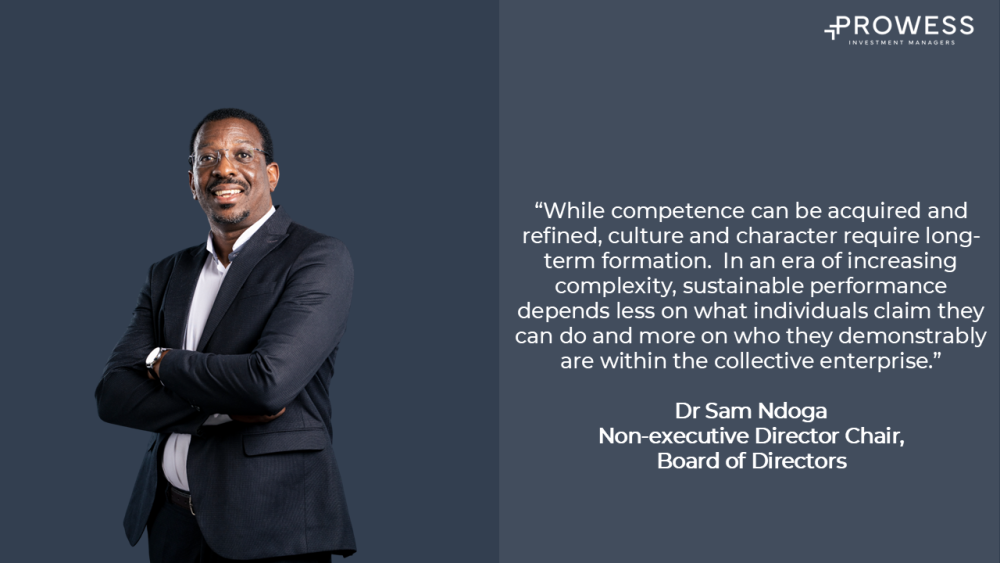
A CV is a polished narrative. Grooming is empirical evidence. While competence can be acquired and refined, culture and character require long-term formation. Organisations that prioritise grooming for best fit cultivate leaders whose behaviour has been tested, whose values are aligned, and whose commitment is proven. In an era of increasing complexity, sustainable performance depends less on what individuals claim they can do and more on who they demonstrably are within the collective enterprise. Culture does not merely support strategy—it conditions its possibility.
References
Ali, Z. and Mehreen, A., 2020, February. An Empirical Investigation of Predicting Employee Performance Through Succession Planning: The Job Demands and Resources Perspective. In Evidence-Based HRM: A Global Forum for Empirical Scholarship (Vol. 8, No. 1, 79-91). Emerald Publishing Limited.
Asokan, T. and Parakandi, M., 2011. Soft Skills: A Tool for Grooming High-performing Managers. Productivity, Investment in Human Capital and the Challenge of Youth Employment. UK: Cambridge Scholars Publishing, 123-134.
Barney, J. 1991. Firm resources and sustained competitive advantage. Journal of Management, 17(1), 99–120.
Becker, K., 2018. Organizational Unlearning: Time to Expand Our Horizons?. The Learning Organization 25(3), 180-189.
Busco, C. and Riccaboni, A., 2009. Performance Measurement Systems and Organisational Culture: Interpreting Processes of Unlearning and Change. In Business Performance Measurement and Management: New Contexts, Themes and Challenges (pp. 357-376). Berlin, Heidelberg: Springer Berlin Heidelberg.
Cañibano, C. and Bozeman, B., 2009. Curriculum Vitae Method in Science Policy and Research Evaluation: The State-of-the-Art. Research Evaluation 18(2), 86-94.
Davids, B., Carney, B.M., & Getz, I. 2018. Leadership Without Ego. In Leadership Without Ego: How to Stop Managing and Start Leading. Cham: Springer International Publishing, 1-183.
Drucker, P. F. 2006. The Effective Executive. New York: HarperBusiness.
Ellis, L. and Wright, J., 2025. Case Study: Culture Over Strategy and Southwest’s Key to Competitive Advantage. Journal for Excellence in Business and Education, 9(1).
Goleman, D. 1995. Emotional Intelligence. New York: Bantam Books.
Gonçalves, M., Farcas, D., Leitão, T., Giorgakis, G., Valeriu, S.F., Traian, M.P. and Kovacs, K. 2017. Evidence Review on Labour Market and Job Place Retention: Mentoring Pathways Towards Employment. Journal of Organisational Transformation & Social Change 14(3), 214-238.
Grobler, A. and Grobler, S. 2016. Intention to quit as precursor of voluntary turnover: Person-organisation fit and the psychological contract-a talent management quandary. South African Journal of Labour Relations 40(2), 5-76.
Hakro, T.H., Siddiqui, M.B. and Lal, S., 2023. Assessing the Relationship Between Organizational Culture, Job Satisfaction, Employee Performance and Employee Engagement. Research Journal of Social Sciences and Economics Review 4(2), 23-30.
Hallowell, R. 1996. Southwest Airlines: A Case Study Linking Employee Needs Satisfaction and Organizational Capabilities to Competitive Advantage. Human Resource Management 35(4), 513-534.
Heskett, J. L., Sasser, W. E., & Schlesinger, L. A. 1994. The Service Profit Chain. New York: Free Press.
Kotter, J. P. 1996. Leading Change. Boston: Harvard Business School Press.
Kristof, A. L. 1996. Person–organization fit: An Integrative Review. Personnel Psychology 49(1), 1–49.
Knorr, A. and Arndt, A., 2018. Most Low-cost Airlines Fail (ed): Why did Southwest Airlines prosper?. In Competition Versus Predation in Aviation Markets (pp. 145-170). Routledge.
Schein, E. H. 2010. Organizational Culture and Leadership (4th ed.). San Francisco: Jossey-Bass.
Leal-Rodríguez, A.L., Eldridge, S., Ariza-Montes, J.A. and Morales-Fernández, E.J., 2019. Understanding How Organizational Culture Typology Relates to Organizational Unlearning and Innovation Capabilities. Journal of the Knowledge Economy 10(4), 1497-1514.
Low, K.P., 2015, June. How To Eliminate or Reduce Egos and Be a Better Leader. In Chinese American Scholars Association: CASA e-Leader Conference in Prague, Czech Republic on (pp. 1-3).
Martinez, P., McGrath, C., Rojas, J. and Llanos, L.A., 2022. Person-Organization Fit & Employee Hiring Practices in Sustainable Organizations. Journal of Management for Global Sustainability 10(1), p.6.
Nichols, B.J., Pedulla, D.S. and Sheng, J.T. 2025. More than a Match: “Fit” as a Tool in Hiring Decisions. Work and Occupations 52(2), 175-203.
Oh, S., Choi, D., Ok, C. and Park, O. 2025. Does Investment in Training Help Firms Retain Talent? Testing the Commitment and Human Capital Perspectives. International Journal of Manpower,46(7), 1373-1387.
Schmidt, F. L., & Hunter, J. 1998. The Validity and Utility of Selection Methods. Psychological Bulletin 124(2), 262–274.
Serpa, S. 2016. An overview of the concept of organisational culture. International Business Management 10(1), 51-61.
Shirkani, J. 2016. Ego vs. EQ: How Top Leaders Beat 8 Ego Traps With Emotional Intelligence. Routledge.
Spence, M. 1973. Job Market Signaling. Quarterly Journal of Economics 87(3), 355–374.
Sung, S.Y. and Choi, J.N. 2023. What Drives Firms to Invest in Training and Developing Employees? Time-Dependent Effects of Firm Internal and External Contingencies. The International Journal of Human Resource Management 34(2), 223-252.
Teixeira da Silva, J.A., Dobránszki, J., Al-Khatib, A. and Tsigaris, P. 2020. Curriculum Vitae: Challenges and Potential Solutions. KOME: An International Journal of Pure Communication Inquiry 8(2), 109-127.
Tholen, G. 2024. Matching Candidates to Culture: How Assessments of Organisational Fit Shape The Hiring Process. Work, Employment and Society 38(3), 705-722.
Thomas, M., 2015. Strategic Principles at Southwest Airlines. Strategic Direction 31(8), 10-12.