

Geopolitical developments surrounding the Iran conflict remained in focus last week, with both the US and Iran signalling meaningful progress toward a framework agreement to end hostilities. Negotiations mediated in Doha have centred on reopening the Strait of Hormuz within roughly 30 days of a formal deal, easing sanctions, and addressing frozen funds, though key details remain thin and US strikes on Iranian vessels have added tension. Markets are closely watching oil price dynamics, potential second-round inflation effects, and central bank responses amid fragile peace talks and persistent global supply risks. Locally, the SARB is expected to hike the repo rate by 25 bps this week.
International Market Developments
The US and Iran have reached broad understandings on major issues, including the management of the Strait of Hormuz and Iran’s highly enriched uranium stockpile. President Trump described the peace deal as “largely negotiated” while maintaining military readiness and weighing further strikes. Kevin Hassett, White House Chief Economic Adviser, noted that a resolution could cause energy prices to “plummet,” materially easing headline inflation and creating scope for the Fed to cut rates in a data-dependent manner.
Federal Reserve officials remained cautious. FOMC minutes from the April meeting showed most policymakers open to raising rates if inflation stays persistently above target, marking a shift from earlier expectations of easing in 2026. Chicago Fed President Austan Goolsbee highlighted broadening inflation pressures into services, while Richmond Fed President Tom Barkin warned of an era of more frequent supply shocks from geopolitics, trade fragmentation, and other factors. Philadelphia Fed President Anna Paulson favoured holding rates steady until sustained inflation progress is evident, noting the Iran conflict’s impact on oil supply.
In Europe, ECB President Christine Lagarde indicated the June meeting would likely revise the inflation outlook from the March forecast of 2.6%, incorporating energy price pressures, while stressing that long-term inflation expectations remain firmly anchored at 2%. Governing Council member Yannis Stournaras cautioned against excessively restrictive policy that could weigh on growth and investment, advocating a measured, data-dependent approach.
Local Market Developments
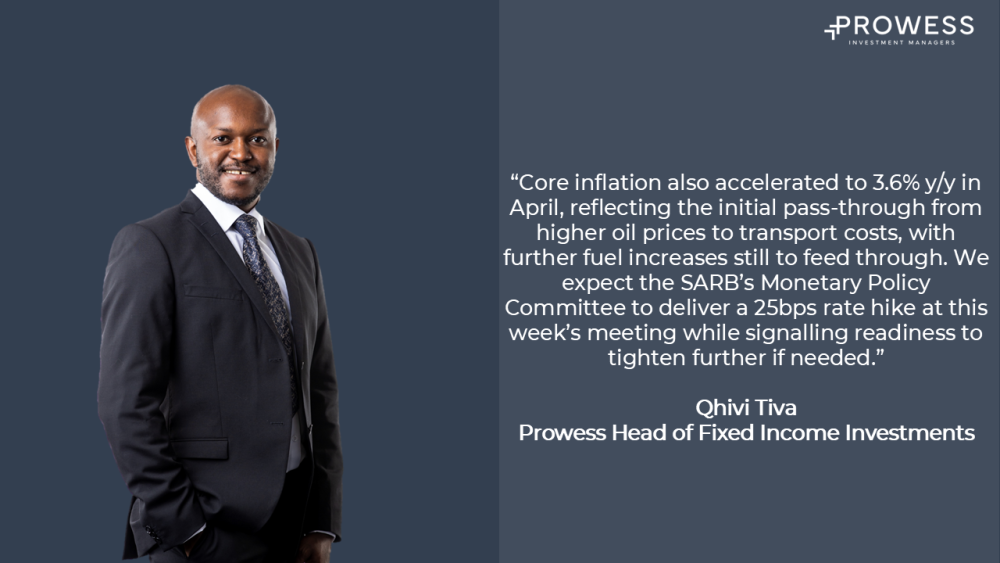
South Africa’s headline CPI surprised on the upside in April, rising to 4.0% y/y (a 20-month high) from 3.1% in March, with a strong 1.1% m/m increase. Core inflation also accelerated to 3.6% y/y. The data reflects the initial pass-through from higher oil prices to transport costs, with further fuel increases still to feed through. We expect the SARB’s Monetary Policy Committee to deliver a 25bps rate hike at this week’s meeting while signalling readiness to tighten further if needed.