

Last week, global markets remained focused on central bank vigilance against persistent inflation, with the ECB and Fed emphasising the need for restrictive policy stances. Locally, SARS achieved record gross revenue collection of R2.303 trillion for the 2024/25 fiscal year ending March 2025, exceeding revised estimates by R8.8 billion. This week, attention shifts to key data releases, including UK GDP and US labour market updates, amid ongoing concerns over productivity, tariffs, and economic momentum in major regions.
International Market Developments
In the US, Fed speakers continued to strike a cautious tone. Atlanta Fed President Raphael Bostic, who retires at the end of February and is not a voting member this year, advocated for maintaining a moderately restrictive policy posture, warning that any cuts (perhaps one or two to reach neutral) could jeopardise returning inflation to the 2% target. He noted strong economic momentum and the harmful effects of prolonged high inflation on investment. Fed Governor Lisa Cook supported the recent decision to hold rates unchanged, stating risks are now tilted toward higher inflation, though she expects the labour market to benefit from last year’s three cuts.
ECB President Christine Lagarde reiterated the central bank’s commitment to keeping inflation under control, underscoring that Europe’s long-term resilience and competitiveness depend on a supportive policy framework. Policymakers highlighted the Eurozone’s resilience to external headwinds, including US tariffs, with expectations of higher public spending in Germany and elsewhere providing support. However, Lagarde stressed the need to reinforce underlying foundations, citing weak productivity growth and subdued momentum, while advocating for structural reforms and deeper economic integration.
Local Market Developments
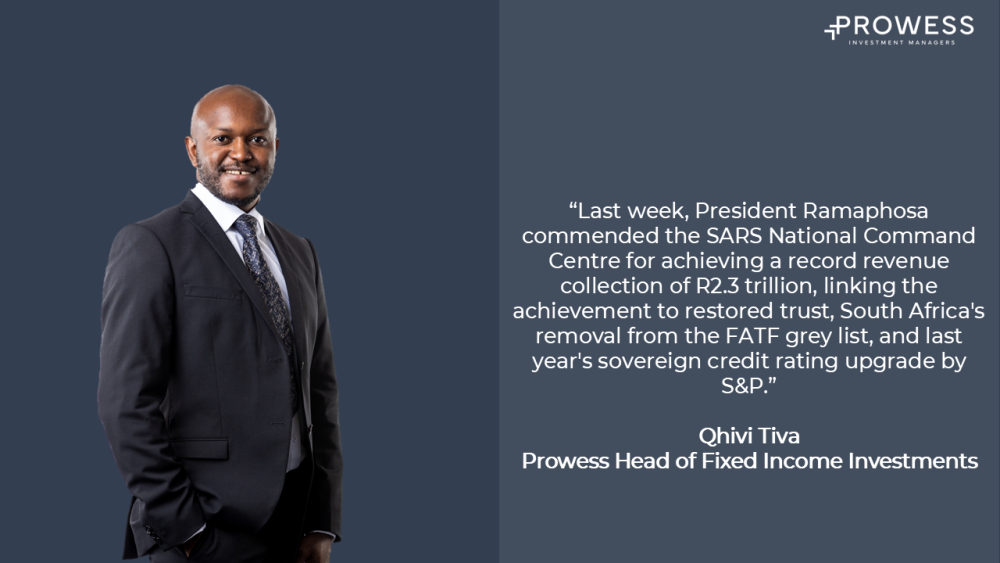
Locally, the week was quiet on major data releases, but positive fiscal news emerged. President Cyril Ramaphosa commended the SARS National Command Centre for achieving a record revenue collection of R2.3 trillion—the highest ever. He described this as a vital milestone, enabling essential public services, social grants, infrastructure maintenance, and state operations. Ramaphosa linked the achievement to restored trust, South Africa’s removal from the FATF grey list, and last year’s sovereign credit rating upgrade by S&P. He emphasized that policy certainty and efficient, honest tax administration remain key to attracting investment.
Additionally, SARB Governor Lesetja Kganyago cautioned over the weekend on the rising popularity of stablecoins, warning of risks that these assets could “break apart” and undermine monetary stability. He stressed central banks’ duty to protect the unity of the monetary system and affordability of money, urging vigilance as digital finance evolves. On the political front, DA leader John Steenhuisen announced he will step down in April to focus on his role as Minister of Agriculture.