

Globally, challenges to the ceasefire in the Middle East conflict signalled the potential for further escalation, while locally, the March CPI is due this week with risks to the upside following the effect of the surge in oil prices.
International Market Developments
Over the weekend, the US seized an Iranian-flagged cargo vessel attempting to breach the US’s naval blockade, prompting Tehran to vow retaliation and casting doubt over plans for a second round of talks with the US. The conflict in the Middle East marked further escalation after the ceasefire came under renewed strain, driven primarily by escalating tensions in the Strait of Hormuz.
Iran has reversed its earlier decision to reopen the Strait, reimposing restrictions on commercial shipping after the US confirmed that its own naval blockade of Iranian ports would remain in force. As a result, shipping traffic through the strait stalled again after vessels came under fire mid-transit, amplifying concerns over global energy supplies and trade flows.
Iran has hardened its stance on negotiations, saying that no decision had been made to participate in further peace talks, proposed to take place in Pakistan. Iran also reiterated that the US blockade of Iranian ports was undermining diplomacy.
Local Market Developments
Locally, the March CPI is due on Wednesday and market consensus is expected at 3.1% y/y, from 3.0% y/y in February. On a m/m basis, CPI is expected to have increased by 0.6%, after having increased by 0.4% m/m in February. Core CPI is projected at 3.1% y/y in March, from 3.0% y/y in February.
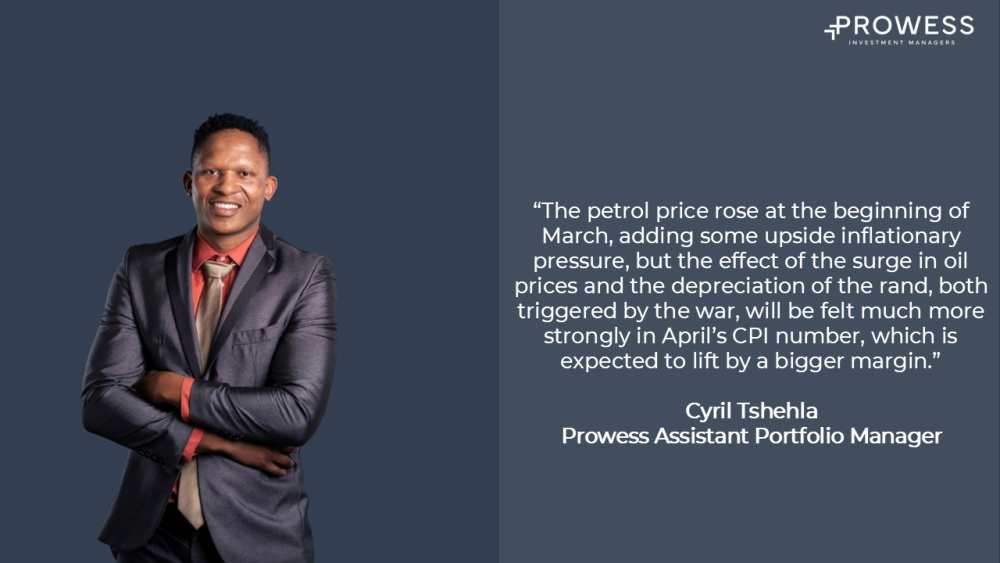
The petrol price rose modestly at the beginning of March, which will have added some upside inflationary pressure. Fuel prices are calculated on price movements during the previous month however the effect of the surge in oil prices and the depreciation of the rand, both triggered by the war in the Middle East will be felt in April’s CPI number which is expected to have lifted by a bigger margin.