

Introduction
Artificial Intelligence (AI) is no longer something reserved for the future. It is already shaping the way we work, study, communicate, and make decisions. AI tools have become deeply integrated into our daily lives, and their influence continues to grow across industries, especially within financial services.
Ten years ago, people relied heavily on their own thinking, analysis, and decision-making processes to solve problems and process information. Today, many individuals use AI tools to assist with research, content creation, communication, and even strategic thinking. Whether it is rewording an email, summarizing information, or conducting research, AI has become part of how we operate both professionally and personally.
However, as AI adoption increases, it also raises important questions about how dependent we may become on these technologies.
I previously attended a workshop in which teams of students were tasked with developing a product to solve a real-world problem whilst also being educational, engaging, and impactful to the community. The exercise required brainstorming, creativity, and critical thinking. However, some students struggled to fully engage in the activity, appearing hesitant to trust their own thinking and ideas.
That experience highlighted an important reality. While AI tools are powerful, we must remain mindful of how we use them. There is a growing risk that people may begin relying on AI to think on their behalf rather than using it to support their thinking. Excessive dependence on AI could reduce critical thinking, creativity, and independent problem-solving skills because technology can often produce answers faster and more efficiently than humans.
This raises an important question: what does this mean for the future?
It’s clear that AI platforms such as ChatGPT are becoming more than just productivity tools. People are increasingly using AI to hold conversations, seek opinions, and even discuss personal matters, potentially replacing important aspects of human interaction.
AI is the Future, but Awareness is Essential
While AI undoubtedly represents the future, it is equally important that individuals and organisations educate themselves on both the benefits and the risks associated with these technologies.
Within the asset management industry, AI offers significant opportunities to improve efficiency and decision-making. AI tools can analyse vast amounts of financial data faster than humans. They can identify market trends, detect investment opportunities, and support predictive analysis through machine learning models.
AI can also strengthen risk management capabilities by identifying unusual patterns, potential fraud risks, and market anomalies at an early stage.
From an Investment Operations perspective, AI can automate repetitive and manual processes such as reporting, reconciliations and document management.
This automation creates additional capacity within teams, allowing employees to focus more on client servicing, relationship management, and complex problem-solving.
AI also enhances the client experience by enabling personalized servicing through automated processes, intelligent reporting, and chatbot support. Relationship managers can leverage AI insights to better understand client behaviour and improve overall service delivery.
The Risks Cannot Be Ignored
Yet despite the potential benefits AI, organizations must remain vigilant and cautious, particularly when dealing with sensitive or confidential information.
One of the biggest concerns surrounding AI is data security and governance. Effective risk management is essential to prevent:
- Unauthorized access to confidential information
- Data leaks through third-party AI platforms
- Cybersecurity breaches and hacking
- Cross-border data transfer risks
- Lack of transparency regarding how data is processed
- AI models learning from sensitive internal information
- Non-compliance with data protection legislation
As AI adoption grows, organizations must work closely with internal IT Risk and Compliance teams to determine which AI tools are authorized for use and what information may or may not be entered into these systems.
Governance Must Accompany Innovation
Organizations should establish clear AI governance frameworks that address:
- Approved AI platforms;
- Data usage restrictions;
- Data retention policies;
- Security certifications;
- Data encryption standards;
- Regulatory compliance requirements; and crucially
- Employee training and awareness
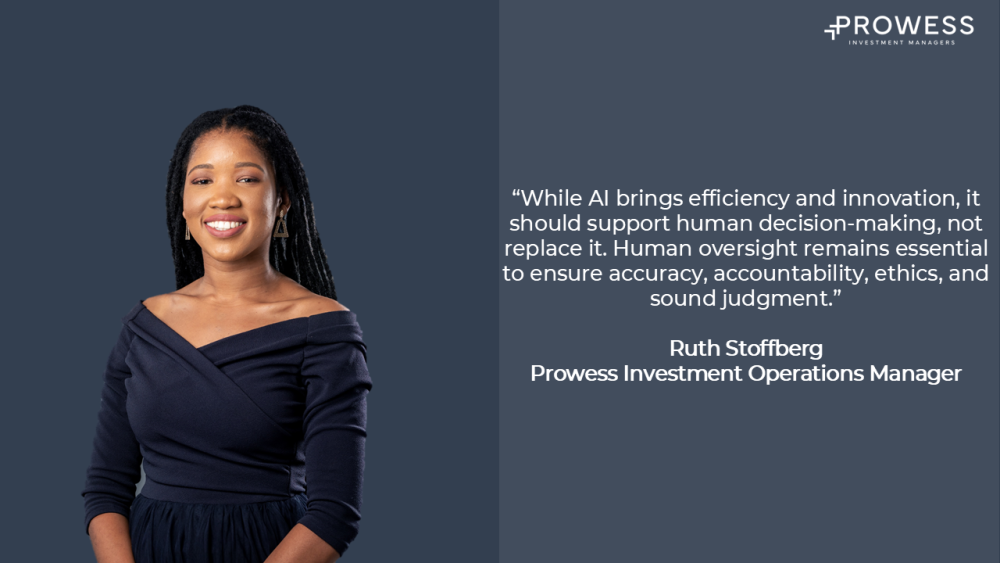
While AI brings efficiency and innovation, it should support human decision-making, not replace it. Human oversight remains essential to ensure accuracy, accountability, ethics, and sound judgment.
AI has the potential to create significant value within asset management and investment operations. However, uncontrolled AI adoption can create equally significant risks. Ultimately, data safety depends not only on the technology itself, but on governance, infrastructure, policies, and responsible usage.
The most sustainable approach is controlled AI adoption: leveraging AI for efficiency and insight while ensuring that ownership, accountability, and security remain firmly within the organization.