

Geopolitical developments surrounding the Iran conflict dominated markets last week, culminating in an interim agreement between the US and Iran to end hostilities and reopen the Strait of Hormuz. The deal, which includes a 60-day ceasefire and immediate reopening of the critical waterway, has significantly eased supply concerns after months of disruption. While key issues such as sanctions relief and Iran’s nuclear program remain for future negotiations, the breakthrough triggered a sharp drop in oil prices and reduced inflation fears globally. Markets are now assessing the implications for energy costs, second-round effects, and central bank policy paths as the conflict winds down.
International Market Developments
Oil prices fell sharply on the news, with Brent crude tumbling nearly 5% toward $83 per barrel and WTI near $80, returning to early March levels. This eased concerns over energy-driven inflation, supporting a rally in Treasuries across the curve. Yields dropped notably, especially at the front end, with swaps pricing in roughly a 60% chance of a 25bp Fed hike by December—down from earlier expectations amid the de-escalation.
The Federal Reserve enters its closed period ahead of the June 17 FOMC decision. Markets have largely abandoned hopes for rate cuts in 2026 due to persistent inflation pressures, now pricing in the possibility of a hike by year-end. Recent data showed headline PPI rising to 6.5% y/y in May (highest since late 2022), driven by energy, while CPI printed at 4.2% y/y—the first 4% handle in three years—with core at 2.9%. Initial jobless claims rose slightly to 229k. The new Chair Kevin Warsh will lead his first meeting alongside former Chair Jerome Powell, in a divided committee navigating a complex landscape that may require Fed reform.
Globally, several central banks are in focus this week. The ECB delivered a widely expected 25bp hike, bringing the deposit rate to 2.25%, citing the major energy shock. President Lagarde highlighted upside risks to inflation persisting into 2027. The Bank of Japan is expected to raise rates to the highest level since 1995. The Bank of England’s MPC is likely to show renewed divisions, while the Reserve Bank of Australia is anticipated to hold rates at 4.35% for the first time this year amid softening economic signals. The World Bank cut its 2026 global growth forecast to 2.5% (from 2.6%), warning of downside risks from energy disruptions, with global inflation projected to rise to 4.0%.
Risk assets received a boost from the SpaceX IPO, a historic event valued at $1.8 trillion that minted significant wealth and lifted broader equities. The DXY finished just below 100, gold saw mixed moves, and private credit remained in focus with redemption pressures at certain funds.
Local Market Developments
South Africa’s economy showed resilience in Q1 2026. GDP growth beat forecasts at 0.5% q/q (1.9% y/y), led by finance, agriculture, trade, and mining. Net exports contributed strongly.
The current account surplus surged to R190.7bn (2.4% of GDP), far above expectations, driven by a R437.9bn trade surplus and improved terms of trade. Exports rose on price and volume, while imports declined.
With global central bank decisions ahead, local markets will watch the rand and oil pass-through. The positive local data and easing energy prices could support a more measured SARB outlook.
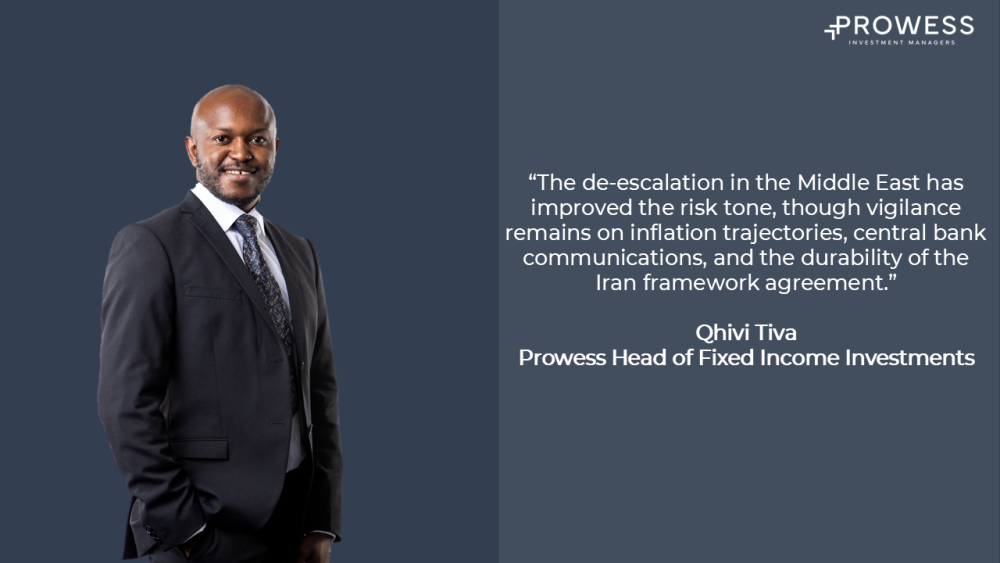
Overall, the de-escalation in the Middle East has improved the risk tone, though vigilance remains on inflation trajectories, central bank communications, and the durability of the Iran framework agreement.