

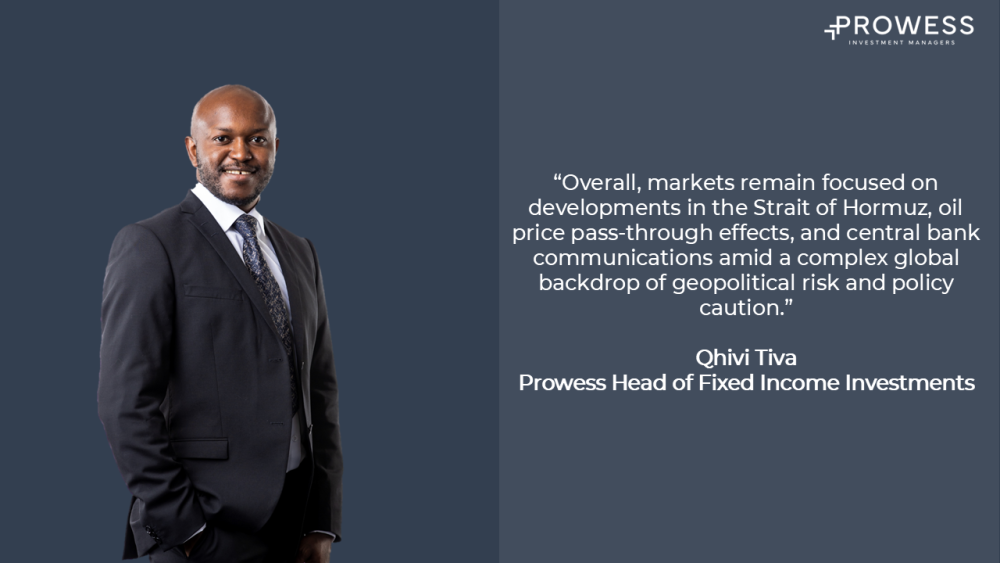
Last week, geopolitical tensions surrounding the Iran conflict remained elevated after Tehran formally presented a 14-point, three-phase proposal for ending the war within 30 days. The plan included mutual non-aggression guarantees, the lifting of the US naval blockade, and the reopening of the Strait of Hormuz, while deferring substantive nuclear discussions. Overall, markets remain focused on developments in the Strait of Hormuz, oil price pass-through effects, and central bank communications amid a complex global backdrop of geopolitical risk and policy caution.
International Market Developments
In the US, the FOMC decided to keep the Fed funds rate unchanged at 3.50-3.75%. This marked a third consecutive pause, with three regional bank presidents dissenting in favour of removing easing bias and a Fed governor dissenting for a cut. Policymakers adopted a cautious, data-dependent stance amid still-elevated inflation (partly driven by rising global energy prices) and a moderating labour market, while noting solid economic expansion alongside significantly increased uncertainty. Fed Chair Jerome Powell, whose term ends on 15 May, indicated he intends to remain on the Board of Governors until the Justice Department’s investigation into the central bank reaches “transparency and finality.” Kevin Walsh is on track to succeed him. New York Fed President John Williams described the current policy stance as appropriately balanced, projecting inflation around 3% this year easing toward 2% by 2027, with US growth of 2–2.25% in 2026 and 2027.
BOE Deputy Governor for Financial Stability Sarah Breeden warned that financial markets appear complacent and are not fully pricing in the range of risks, noting that asset prices look “too high” given geopolitical, macroeconomic, and financial vulnerabilities. She highlighted rapid growth in private credit and shadow banking as particular concerns, and she also flagged the prospect of multiple shocks materialising simultaneously.
Local Market Developments
President Ramaphosa, in his Freedom Day speech, reflected on the country’s transition from apartheid to democracy, acknowledging major gains in access to services since 1994 while stressing that freedom remains incomplete amid persistent poverty, inequality, unemployment, corruption, and service delivery challenges. He reaffirmed commitments to the rule of law, anti-corruption efforts, inclusive land reform, and economic revitalisation.
The Prudential Authority notified banks of its intention to derecognise Moody’s Investors Service South Africa as an eligible external credit assessment institution (ECAI), following the FSCA’s cancellation of its local registration. Banks have a 24-month transition period to adjust, with no impact on South Africa’s sovereign rating (overseen by the global Moody’s entity) or ratings issued from other jurisdictions.